Battery Electrode Coating with Ultrasonic Spray Technology
Battery electrode development requires precise control of material deposition, coating uniformity, surface coverage, and layer thickness. These factors can affect electrode structure, interfacial contact, material utilization, and the repeatability of battery research.
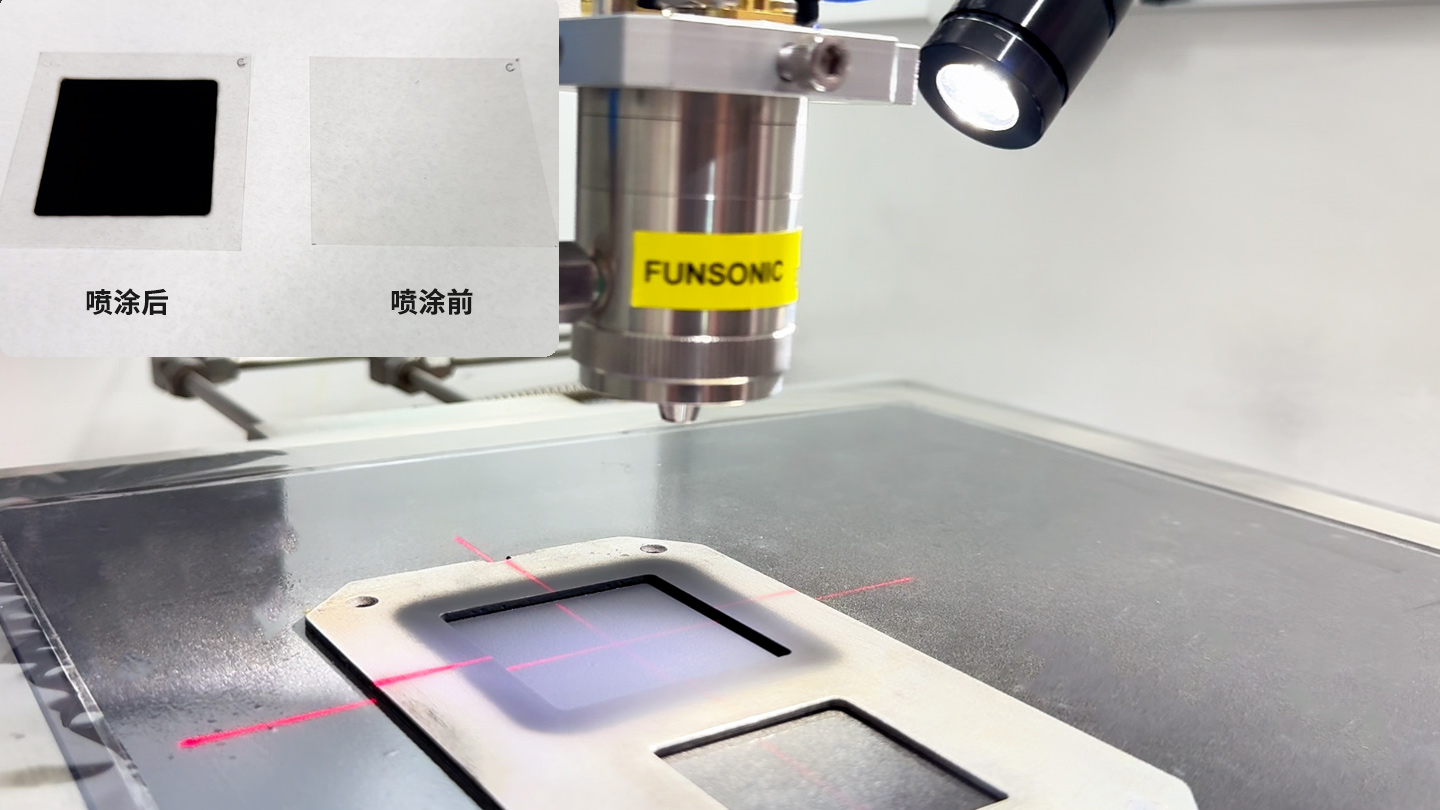
Ultrasonic spray coating converts a liquid formulation into a low-velocity mist of fine droplets and deposits the material onto a controlled substrate surface. When combined with precision liquid delivery, programmable motion, substrate heating, and suitable process control, it provides a flexible method for producing thin and repeatable battery material coatings.
The technology is particularly suitable for battery research, process development, pilot-scale evaluation, and thin functional coating applications.
Where Is Ultrasonic Spray Used in Battery Development?
Ultrasonic spray coating can be used to deposit selected battery materials onto metal foils, porous membranes, composite structures, and other research substrates.
Typical applications include:
• Thin anode and cathode material layers
• Conductive carbon and carbon nanotube coatings
• Ceramic and functional separator coatings
• Surface modification of copper and aluminum current collectors
• Solid electrolyte and interfacial layers
• Protective and barrier coatings
• Binder and adhesion-promoting layers
• Gradient or multilayer electrode structures
• Experimental coatings for lithium-ion and solid-state batteries
• Next-generation battery material research
The suitability of each material depends on particle size, solids content, viscosity, surface tension, solvent system, suspension stability, target coating weight, and required film thickness.
How Does the Battery Electrode Coating Process Work?
The coating process begins with the preparation of a sprayable battery material formulation. The liquid must be appropriately mixed or dispersed before it enters the coating system.
A precision liquid delivery system supplies the formulation to the ultrasonic nozzle at a controlled flow rate. High-frequency vibration at the nozzle tip breaks the liquid film into fine droplets without relying on high liquid pressure.
Shaping air may be used to control the spray width and direct the droplets toward the substrate. The spray head or substrate then moves according to a programmed coating path.
Multiple light coating passes can be applied to build the required coating weight gradually. Substrate heating or intermediate drying may be used to manage solvent evaporation and film formation.
Battery Materials and Substrates
Depending on formulation properties and project requirements, ultrasonic spray coating may be evaluated for materials such as lithium iron phosphate, nickel manganese cobalt oxides, conductive carbon, graphite, graphene-based materials, carbon nanotubes, ceramic particles, polymer binders, solid electrolyte materials, and other experimental battery formulations.
Common substrates include:
• Aluminum foil
• Copper foil
• Polymer battery separators
• Ceramic-coated separators
• Carbon fiber structures
• Metal sheets
• Porous membranes
• Glass or silicon research substrates
• Existing electrode surfaces
A coating test is recommended before equipment configuration because materials with high solids content, large particles, rapid sedimentation, or unsuitable viscosity may require formulation adjustment, agitation, recirculation, filtration, or a different coating method.
Advantages for Battery Research and Pilot Coating
Ultrasonic spray coating offers several advantages for battery material development:
• Fine, low-velocity atomization
• Controlled liquid delivery
• Repeatable coating paths
• Low overspray compared with conventional pressure spraying
• Efficient use of expensive research materials
• Suitable for thin and multilayer coatings
• Non-contact deposition on delicate substrates
• Adjustable spray width and coating area
• Compatibility with programmable motion platforms
• Scalable configuration from laboratory research to pilot processing
Actual coating performance depends on the complete interaction between the material formulation, ultrasonic nozzle, liquid delivery system, shaping air, substrate temperature, motion speed, spray distance, and drying conditions.
Thin Functional Coatings Instead of Conventional Thick Slurry Coating
Ultrasonic spray coating is most effective for thin functional films, low-to-moderate solids formulations, surface modification, multilayer structures, and advanced battery material research.
It is not intended to replace conventional slot-die or roll-to-roll coating in every high-volume battery electrode production process. Traditional coating methods remain more suitable for many high-solids, high-loading, and thick electrode slurry applications.
The correct coating technology should therefore be selected according to the required coating thickness, material loading, slurry properties, production speed, substrate width, and research or manufacturing objective.
Key Process Parameters
Important process parameters for ultrasonic battery coating include:
• Material solids content
• Particle size and particle distribution
• Viscosity and surface tension
• Solvent and binder system
• Suspension stability
• Liquid flow rate
• Ultrasonic nozzle frequency
• Shaping air pressure
• Spray distance
• Coating speed
• Pass spacing and overlap
• Number of coating passes
• Substrate temperature
• Drying conditions
• Target coating weight and thickness
These parameters should be evaluated together rather than adjusted independently.
Laboratory and Pilot-Scale Battery Coating Systems
Ultrasonic battery coating systems can be configured for small research samples, programmable laboratory coating, or pilot-scale continuous processing.
A typical system may include an ultrasonic spray nozzle, ultrasonic generator, precision liquid delivery unit, programmable motion platform, substrate heater, shaping air control, exhaust enclosure, and optional liquid agitation or recirculation.
The final equipment configuration should be based on the customer’s substrate dimensions, coating material, target thickness, coating area, production rate, solvent requirements, and process development goals.
Information Required for a Battery Coating Evaluation
To evaluate your battery electrode coating application, please provide:
1. Coating material and formulation
2. Solvent and binder system
3. Solids content
4. Particle size range
5. Material viscosity, if available
6. Substrate material and dimensions
7. Target coating thickness or coating weight
8. Required coating area and uniformity
9. Laboratory, pilot, or production objective
10. Required processing speed
11. Heating and drying requirements
12. Safety information for the coating liquid
Material samples and substrate samples may be required for coating trials before final system selection.
Custom Ultrasonic Battery Coating Solutions
We provide configurable ultrasonic spray coating systems for battery material research, electrode surface processing, separator coating, current collector modification, and other thin functional coating applications.
The coating system can be adapted to different sample sizes, motion ranges, liquid delivery requirements, heating conditions, and process development objectives.
Send us your battery material information, substrate dimensions, and target coating requirements to discuss a suitable laboratory or pilot-scale coating solution.