
[## Ultrasonic Sonochemistry System for Liquid Processing
An ultrasonic sonochemistry system applies high-intensity ultrasonic energy to liquids to enhance mixing, dispersion, emulsification, extraction and selected chemical processes. Unlike ordinary ultrasonic cleaning equipment, a sonochemistry system is designed to deliver concentrated acoustic energy directly into the processing medium.
When ultrasonic vibration is transmitted into a liquid, alternating compression and rarefaction cycles create microscopic bubbles. These bubbles grow and collapse rapidly through a phenomenon known as acoustic cavitation. The resulting fluid motion, shear forces and microjets can improve mass transfer, break down agglomerates and accelerate many physical or chemical processes.
FUNSONIC ultrasonic sonochemistry systems can be configured for batch or continuous processing. Laboratory, pilot-scale and industrial configurations are available according to the material, processing volume and production requirements.
## How Ultrasonic Sonochemistry Works
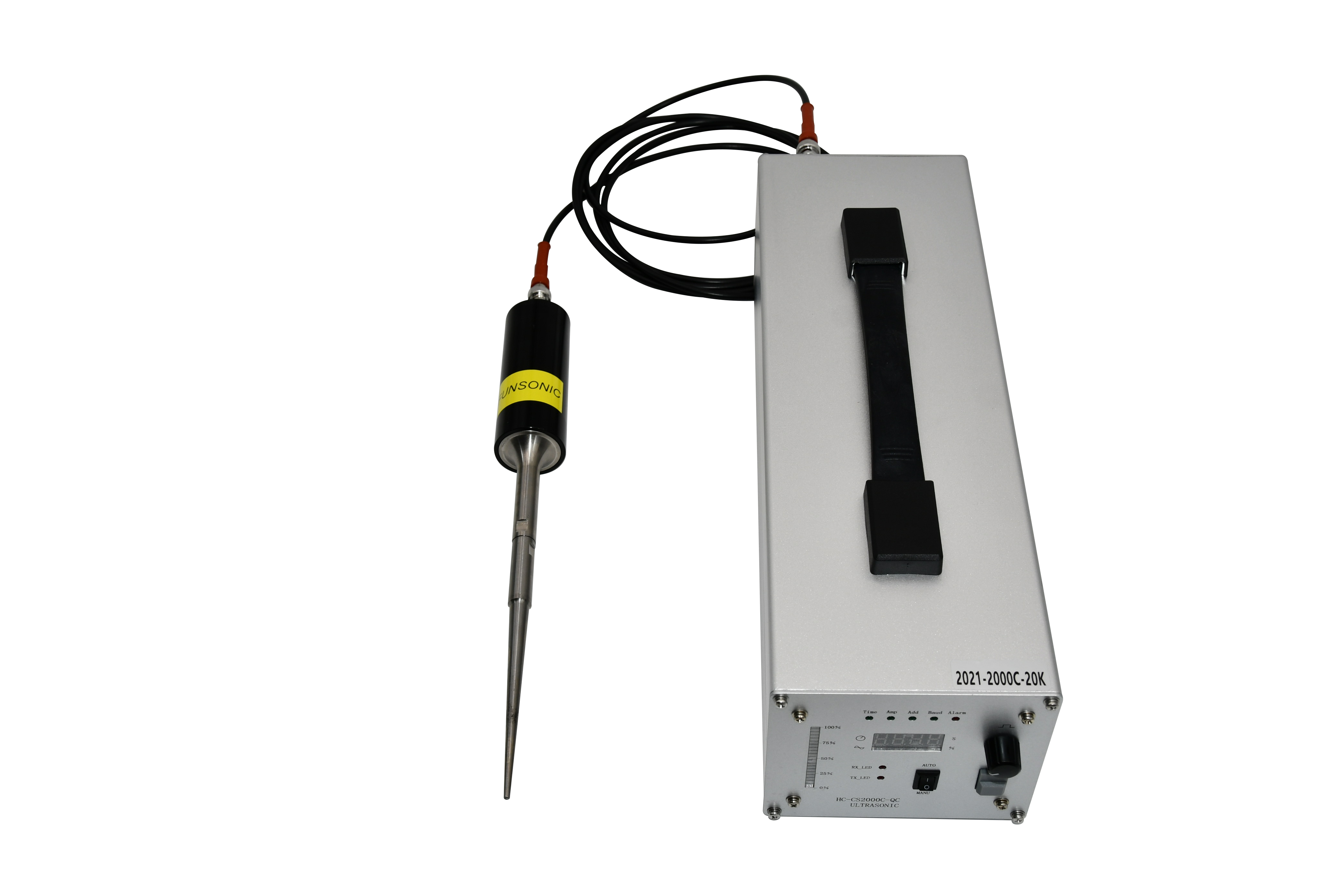
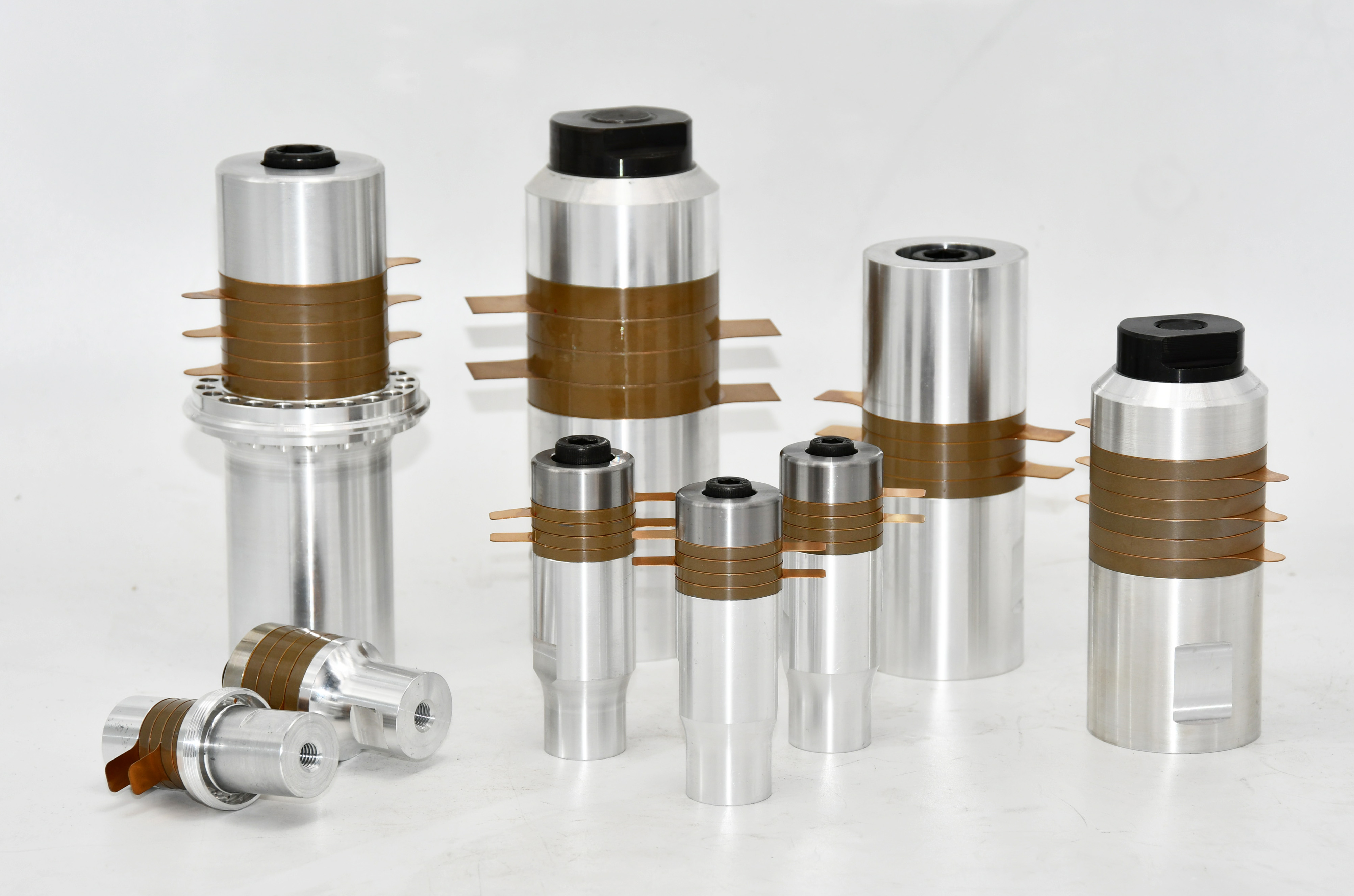
A typical ultrasonic sonochemistry system consists of an ultrasonic generator, transducer, booster, ultrasonic probe or sonotrode, processing vessel and control system.
The ultrasonic generator converts electrical power into high-frequency electrical energy. The transducer then converts the electrical energy into mechanical vibration. This vibration is amplified and transmitted through the ultrasonic probe directly into the liquid medium.
As the probe vibrates, acoustic cavitation occurs in the surrounding liquid. The formation and collapse of cavitation bubbles can produce:
- Intense local fluid movement - High shear forces - Microscopic liquid jets - Improved mass transfer - Particle deagglomeration - Faster mixing between liquid phases - Increased contact between reactants
The actual processing result depends on the ultrasonic frequency, amplitude, power density, probe design, processing time, liquid volume, temperature, pressure and material properties.
## Designed Around the Processing Material
Ultrasonic liquid processing cannot be selected only by the total tank volume. The effective system configuration also depends on the viscosity, solid content, particle size, temperature sensitivity and required treatment result.
For application evaluation, customers are encouraged to provide:
- Material composition - Liquid volume per batch or flow rate - Viscosity and solid content - Initial and target particle size - Required processing result - Current mixing or processing method - Operating temperature - Batch or continuous-processing requirement - Production capacity - Safety or explosion-protection requirements
Based on this information, FUNSONIC can recommend a suitable frequency, output power, ultrasonic probe, reactor structure and processing method.
## Batch and Continuous Sonochemical Processing
For laboratory evaluation and small-volume production, ultrasonic sonochemistry can be performed in a batch vessel. The ultrasonic probe is inserted into the liquid, and the material is processed for a controlled period.
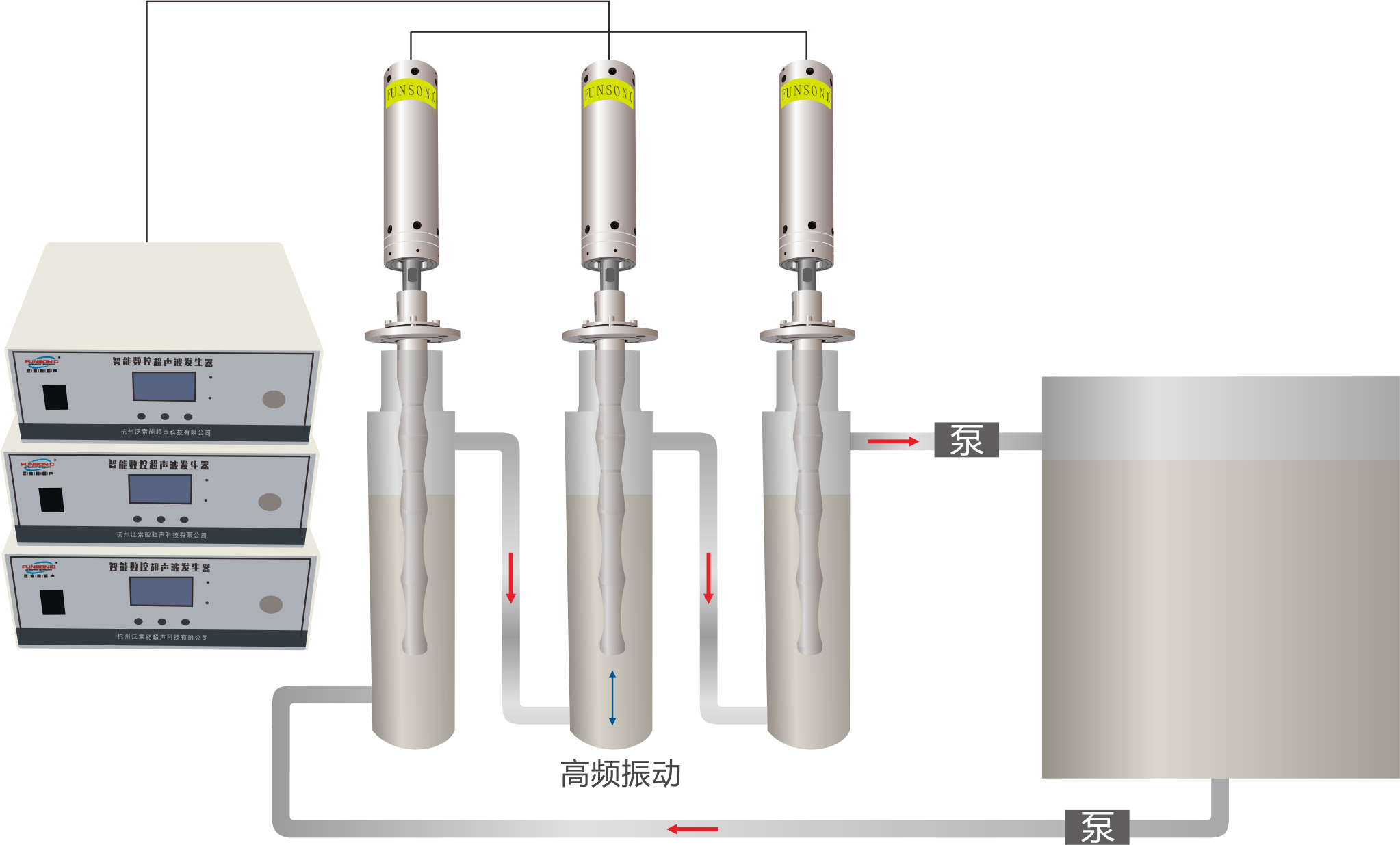
For larger production requirements, a flow-through ultrasonic reactor may provide better process continuity and energy distribution. The liquid passes through the reactor chamber while being exposed to ultrasonic energy. Multiple ultrasonic units can also be arranged according to the required flow rate and processing intensity.
The appropriate configuration depends on the material behavior, processing target, residence time and required production capacity.
## Ultrasonic Probes and Reactors
The ultrasonic probe is a critical part of the sonochemistry system because it transmits mechanical vibration directly into the liquid. Probe diameter, length, material and amplitude influence the cavitation field and processing intensity.
Titanium alloy is commonly used for ultrasonic probes because of its acoustic performance, strength and corrosion resistance. However, material compatibility must still be evaluated when processing corrosive chemicals or sensitive formulations.
Customized processing vessels and flow-through reactors can be designed according to the working volume, operating pressure, temperature-control requirement and production method.
## Temperature and Process Control
High-intensity ultrasonic processing can increase the temperature of the liquid. Temperature control may therefore be necessary for heat-sensitive materials or processes that require stable operating conditions.
Depending on the application, the system may be combined with:
- Cooling water circulation - Jacketed processing vessels - External heat exchangers - Temperature sensors - Programmable processing time - Amplitude adjustment - Energy monitoring - Flow-rate control - PLC or touchscreen control - Automated production line communication
Controlling these parameters helps improve process repeatability during laboratory testing and industrial production.
## Typical Sonochemistry Applications
Ultrasonic sonochemistry systems are used in chemical processing, nanomaterials, battery materials, coatings, pharmaceuticals, biotechnology, food processing, environmental treatment and other liquid-processing fields.
Typical applications include nanoparticle dispersion, powder deagglomeration, emulsion preparation, botanical extraction, cell disruption, catalyst processing, slurry homogenization, chemical reaction enhancement and wastewater treatment research.
Because every material responds differently to ultrasonic energy, laboratory testing or pilot-scale evaluation is recommended before confirming an industrial processing system.
## Application Testing and Scale-Up
A successful laboratory result does not mean that industrial scale-up should be based only on increasing the rated ultrasonic power. Vessel geometry, probe position, energy density, treatment time, temperature and flow conditions can all affect processing performance.
FUNSONIC can evaluate the application according to the material properties, test volume and target production capacity. The system can then be configured for laboratory research, pilot validation or industrial production.
Send us your material information, processing volume, current process and required result. Our engineers will evaluate the application and recommend an appropriate ultrasonic sonochemistry system.](<## Ultrasonic Sonochemistry System for Liquid Processing An ultrasonic sonochemistry system applies high-intensity ultrasonic energy to liquids to enhance mixing, dispersion, emulsification, extraction and selected chemical processes. Unlike ordinary ultrasonic cleaning equipment, a sonochemistry system is designed to deliver concentrated acoustic energy directly into the processing medium. When ultrasonic vibration is transmitted into a liquid, alternating compression and rarefaction cycles create microscopic bubbles. These bubbles grow and collapse rapidly through a phenomenon known as acoustic cavitation. The resulting fluid motion, shear forces and microjets can improve mass transfer, break down agglomerates and accelerate many physical or chemical processes. FUNSONIC ultrasonic sonochemistry systems can be configured for batch or continuous processing. Laboratory, pilot-scale and industrial configurations are available according to the material, processing volume and production requirements. ## How Ultrasonic Sonochemistry Works A typical ultrasonic sonochemistry system consists of an ultrasonic generator, transducer, booster, ultrasonic probe or sonotrode, processing vessel and control system. The ultrasonic generator converts electrical power into high-frequency electrical energy. The transducer then converts the electrical energy into mechanical vibration. This vibration is amplified and transmitted through the ultrasonic probe directly into the liquid medium. As the probe vibrates, acoustic cavitation occurs in the surrounding liquid. The formation and collapse of cavitation bubbles can produce: - Intense local fluid movement - High shear forces - Microscopic liquid jets - Improved mass transfer - Particle deagglomeration - Faster mixing between liquid phases - Increased contact between reactants The actual processing result depends on the ultrasonic frequency, amplitude, power density, probe design, processing time, liquid volume, temperature, pressure and material properties. ## Designed Around the Processing Material Ultrasonic liquid processing cannot be selected only by the total tank volume. The effective system configuration also depends on the viscosity, solid content, particle size, temperature sensitivity and required treatment result. For application evaluation, customers are encouraged to provide: - Material composition - Liquid volume per batch or flow rate - Viscosity and solid content - Initial and target particle size - Required processing result - Current mixing or processing method - Operating temperature - Batch or continuous-processing requirement - Production capacity - Safety or explosion-protection requirements Based on this information, FUNSONIC can recommend a suitable frequency, output power, ultrasonic probe, reactor structure and processing method. ## Batch and Continuous Sonochemical Processing For laboratory evaluation and small-volume production, ultrasonic sonochemistry can be performed in a batch vessel. The ultrasonic probe is inserted into the liquid, and the material is processed for a controlled period. For larger production requirements, a flow-through ultrasonic reactor may provide better process continuity and energy distribution. The liquid passes through the reactor chamber while being exposed to ultrasonic energy. Multiple ultrasonic units can also be arranged according to the required flow rate and processing intensity. The appropriate configuration depends on the material behavior, processing target, residence time and required production capacity. ## Ultrasonic Probes and Reactors The ultrasonic probe is a critical part of the sonochemistry system because it transmits mechanical vibration directly into the liquid. Probe diameter, length, material and amplitude influence the cavitation field and processing intensity. Titanium alloy is commonly used for ultrasonic probes because of its acoustic performance, strength and corrosion resistance. However, material compatibility must still be evaluated when processing corrosive chemicals or sensitive formulations. Customized processing vessels and flow-through reactors can be designed according to the working volume, operating pressure, temperature-control requirement and production method. ## Temperature and Process Control High-intensity ultrasonic processing can increase the temperature of the liquid. Temperature control may therefore be necessary for heat-sensitive materials or processes that require stable operating conditions. Depending on the application, the system may be combined with: - Cooling water circulation - Jacketed processing vessels - External heat exchangers - Temperature sensors - Programmable processing time - Amplitude adjustment - Energy monitoring - Flow-rate control - PLC or touchscreen control - Automated production line communication Controlling these parameters helps improve process repeatability during laboratory testing and industrial production. ## Typical Sonochemistry Applications Ultrasonic sonochemistry systems are used in chemical processing, nanomaterials, battery materials, coatings, pharmaceuticals, biotechnology, food processing, environmental treatment and other liquid-processing fields. Typical applications include nanoparticle dispersion, powder deagglomeration, emulsion preparation, botanical extraction, cell disruption, catalyst processing, slurry homogenization, chemical reaction enhancement and wastewater treatment research. Because every material responds differently to ultrasonic energy, laboratory testing or pilot-scale evaluation is recommended before confirming an industrial processing system. ## Application Testing and Scale-Up A successful laboratory result does not mean that industrial scale-up should be based only on increasing the rated ultrasonic power. Vessel geometry, probe position, energy density, treatment time, temperature and flow conditions can all affect processing performance. FUNSONIC can evaluate the application according to the material properties, test volume and target production capacity. The system can then be configured for laboratory research, pilot validation or industrial production. Send us your material information, processing volume, current process and required result. Our engineers will evaluate the application and recommend an appropriate ultrasonic sonochemistry system.>)